
Monday, 16 August 2021
Inquiry update for T3
Following my Inquiry plan schedule, I carried out individual JAM tests on 20 students in my class and was able to rate them according to my OTJ for their placement against National Standards.My results were as follows; there are 4 students in my class who are still at the Early Year 1 level, 3 at Late Yr 1, 7 at Early Year 2 and 4 at Early Year 3 level. So the majority of my students are just under the expected level and stage in Maths compared to their peers.
 There are currently 8 children who are needing to shift from Stage 2-3 up to Stage 4 by the end of this year. I plan to implement more structured teaching lessons on Maths concepts for this term based on students learning Multiplication and Division, Equal Sharing and Arrays. I have now created 3 Maths groups based on different abilities. I am using a combination of DMiC, Number Knowledge, Group teaching and working in pairs to promote a shift in achievement. There will be a strong emphasis on language acquisition through use of materials and resources with hands on practical activities such as counters and pencil/paper. I aim to carry out GLOSS tests on those students who achieved Early Level 5 on their JAM tests.

Saturday, 14 August 2021
Role play for our Inquiry/Healthy focus in Term 3!
Follow Coach Carter's bootcamp sessions as she attempts to encourage her clients to achieve their personal best in fitness and training, weigh in's and mindfulness...
Saturday, 5 June 2021
Fiafia 2021!
Our school was so excited to finally be able to put on its bi-annual Fiafia concert where 17 different cultural groups performed their item on the stage in front of an audience of their families (whanau) and school community. Mrs Lal and I supported the Bollywood group to learn some Indian dance moves and wear traditional Indian costumes. Awesome effort by everyone involved. Special thanks to Mr Jacobsen and Mr Somerville for making this event happen and providing the amazing new shelter for us to be protected underneath... the cloud Te Kapua.


Wednesday, 2 June 2021
SPS T2 Cluster- Create Workshop
Yesterday we were hosted by the wonderfully resourced Stonefields Primary School for our Manaiakalani PD workshops focusing on the Create part of the Learn, Create, Share pedagogy.
I registered for Marie Hiddleston's workshop on using materials and iPads to create learning for Junior's. She started with a literacy topic on Autumn as her students had been read a poem. Then they talked about the leaves changing colour on the trees and went to collect some leaves to make doubles to ten. She then showed the children a stencil outline of a balck silohette tree and expalained in their picture they needed to include the grass, the sky and the branches of the tree.
They began by using water colours and then used finger painting for the red and yellow leaves. The end result looked so creative!
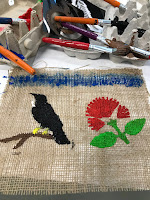
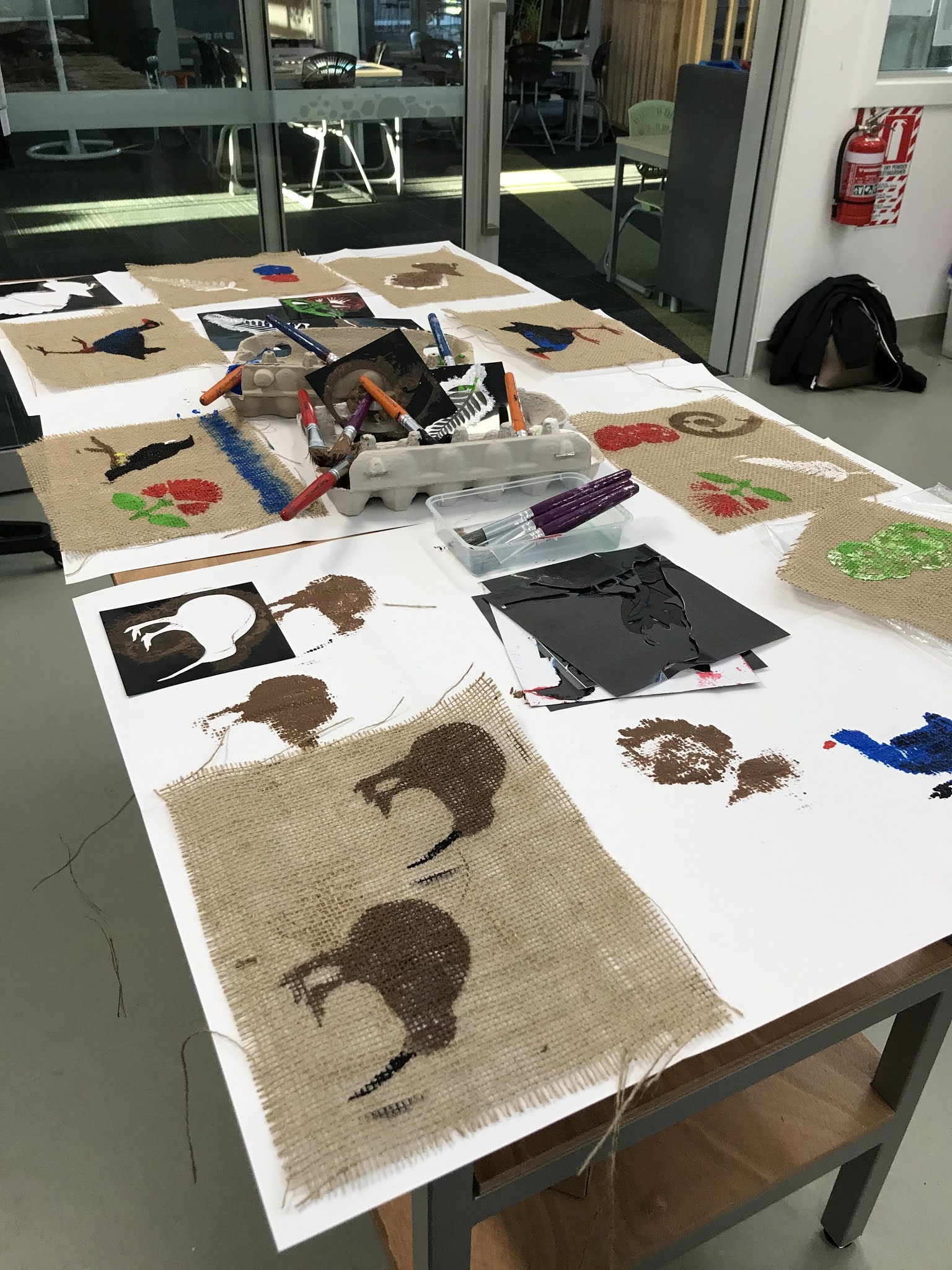
The next idea was to use a small hessian sheet as a background and paint onto it using kiwiana templates such as a koru, tiki, pohutakawa flower, native birds etc. I am considering using this for Matariki...
The last ideas were to focus on mathematical language to create a city landscape using coloured A4 card, felt marker pens and stickers. I did not complete my one, but started it to use as an example. The teacher then leads a discussion around positional language such as which building is the tallest, shortest, highest? How many windows are there, can you count in 2's? How many buildings are there altogether? There was also weaving coloured paper for over and under concepts and creating a pattern such as found in harakeke or flax weaving.
Thank you so much to Marie for sharing her knowldege and expertise. I will definitely be implementing these in the second part of term 2 as we have been focusing on Geometry in Maths.






Monday, 17 May 2021
Inquiry focus for 2021
I plan to lift the achievement in Maths as a Curriculum area with a focus on language acquisition. I will plan for the needs of 3 varied groups of mixed abilities including boys and girls. I aim to identify what strategies they need to learn and gaps that are identified after carrying out a JAM test on each indiviudal student. A significant number of children in my class (30%) have recently been tested on their cognitive skills from the LEAP research and came out with low knowledge in mathematical concepts such as positional language. For e.g. they can not order in sequence, identify first, second, third or even seriate from smallest to biggest. They need to practice using language to describe maths such as "the goat is at the top of the hill and the snake is at the bottom". These are areas which I will plan for in my weekly plans and long term plans to coincide with the National Curriculum content that is covered each term. Term 1's focus was on Number Knowledge/ Basic Facts, Term 2 is on Measurement and Geometry. I have also identified six children as Priority Learners who are going to be monitored closely and assessed according to their ability in time for the end of term reports. I aim to use a combination of DMiC (problem solving using a cultural lense and Number knowledge) to teach the children these strategies in addition, subtraction, mutliplication and skip counting. I aim to provide maths resources on a daily basis for children to find answers and learn strategies for specific learning intentions.
Friday, 16 April 2021
TOD - Tamaki Cluster
Today we were hosted by Glen Taylor School and the PLD focus was on integrating literacy into the curriculum. Our keynote speaker for the day was Dr Rae Si'ilata and her colleague Kyla Hansell whom I had the pleasure of meeting last year when I attended their workshops on Pasifika Immersion with a focus on dual language texts. I registered for 3 different workshops and was able to take away meaningful learning intentions from all of them. The first one was with Clarelle and Khismira who advocated for iPad learning of literacy with the Juniors. I was inspired to make new "Explain Everything's" - EEs to support making and breaking of words using magnetic letters and recording this onto their iPads. The second one was with Jo Gormly - "Creating a rich oral language programme" who explained the need for practical learning opportunities in the classroom to aid children's English language accumulation which in turn increased their interest in writing for meaning. We had a turn at the science experiment of learning about how clouds turn into rain and then it disappears, using a jar of water, shaving foam and blue food colouring.
We also had the privilege of Dr Yanni Vessen being in attendance, to give added support to children learning language by being gifted words and giving them as much opportunity as possible with talking in the classroom, using back and forth conversations.
Because most Maori and Pasifika children arrive at school with an English language deficit, this is crucial to their learning and develeopment, alongside developing sharing skills for co-operative play opportunities. The last workshop I attended was Dr Rebecca Jessen's workshop on "T shaped literacy for Juniors" (going wide and deep) when reading for meaning and finding known words in the text and similar themes to the readers that children may or may not relate to. They introduce new vocabulary which is what can be discussed by the teacher and students and carried out from one text to another...
Finally Rae and Kyla advocated for the need to include diversity, cultural heritage and languages from the child's home environment, encouraging the child to speak their heart languages and providing opportunities for the learning intentions to be focused on resources using inclusive practice as a starting point. Rae reminded us of how much literacy and language Maori and Pasifika children accumulate in their home environments from cultural practices such as Talanoa, oratory, story telling from one generation to another, choral reading, Bible verses, song, waiata, Kapa Haka, and dance. The double hulled waka (boat) termed "The Va'atele Model" developed by Si'ilata (2014) represents a range of key factors identified in order for Pasifika learners to thrive in their educational environment. Bilingualism, second language acquisition and literacy learning are all pertinent for this to be achieved. Kyla advocates for "Cultural Visibility" and how teachers can tap into students interest, prior knowledge and engagement in their learning using a collaborative approach and by using a mirror as well as a window.
Overall, I found these insights to be useful and significant to the children that I teach and will be changing parts of the way I teach literacy in Reading and Writing into the curriculum in order to support Maori and Pasifika learners.


Thursday, 1 April 2021
Term 1 PLD - Whakawhanaungatanga
Our whole staff professional development day was filled with wairua (spirituality), matauranga (knowledge)and whakaaro nui (respect) for the tangata whenua (people of the land) and learning about the heritage of the Treaty of Waitangi (signed in 1840). So I was so pleased to be able to make the connections of the history that I had learnt about from visiting Waitangi earlier this year and the exact same stories told by Hayden and Harley from what happened 200 years ago throughout Northland down to Pt England and surrounding areas such as Mt Wellington, the Tamaki river, Panmure and the eastern beaches such as Karaka Bay, Kohimarama and Orakei sites. I felt so fortunate to meet Hayden, Harley and Crystal from Ngati Paoa who came to korero with us about their Whakapapa. This invloved a significant loss of land and people from the horrendous Maori land wars, a huge massacre took place that was on the same scale as the soldiers who fell at Gallipoli.
They shared the fact that people from their tribe (iwi) were resourceful and productive with the land, as there was an abundance of produce, animals and food to share amongst their hapu. This was distributed fairly and men and women carried out their roles to look after and protect each other. They also shared stories of legends such as those of Taniwha and Princesses ReiPae and sister Reitu (who reigned over the maunga (mountain).
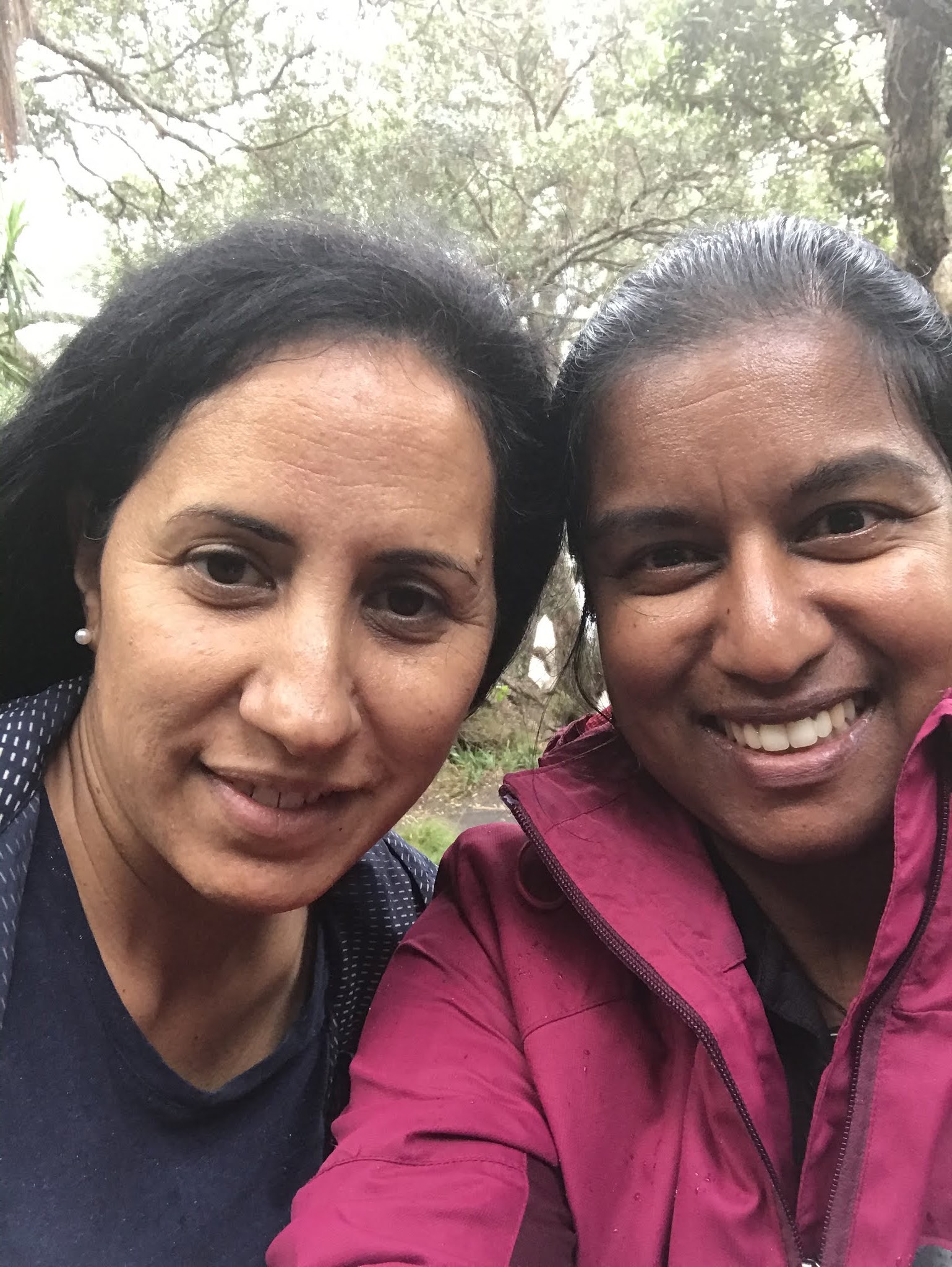
The staff from PES took two coaches and went on a hikoi (walk) around significant landmarks such as Maungarei (Mt Wellington), Riverside Ave, overlooking the Tamaki river and Karaka Bay where several Maori chiefs signed the Treaty of Waitangi once it reached their shores. Here are some photos of my shared learning experience from today...I look forward to learning more with these significant leaders in our community.


Subscribe to:
Posts (Atom)